New York Mayor Election – 2025 Dates, Candidates, Results
When Is the 2025 New York City Mayoral Election?
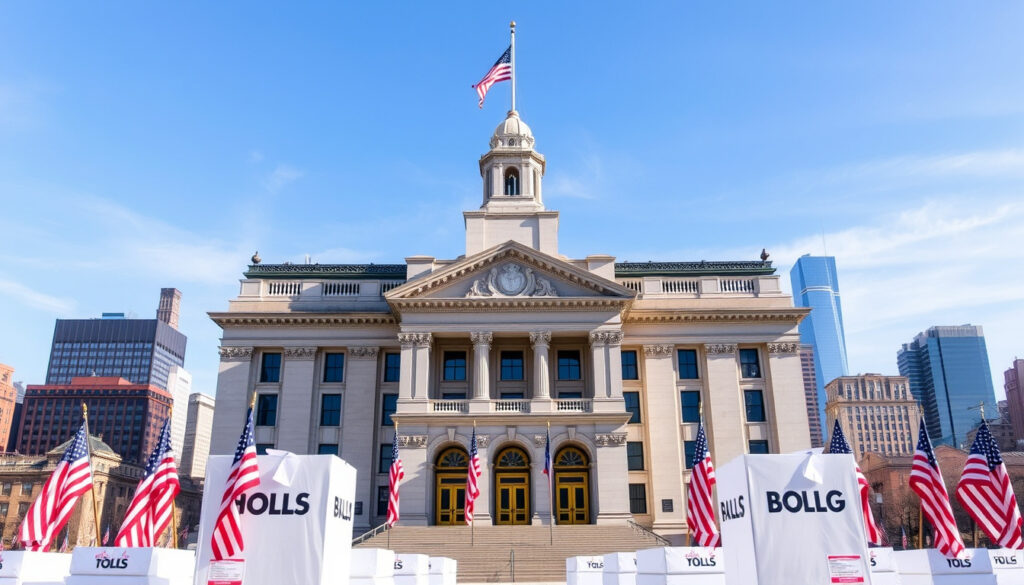
The 2025 New York City mayoral election took place on November 4, 2025, marking one of the most consequential races in the city’s recent political history. Democratic state assemblyman Zohran Mamdani emerged victorious, defeating Republican Curtis Sliwa and independent candidate Andrew Cuomo in a crowded general election field. The contest drew unprecedented attention due to a combination of factors, including high-profile challengers, the incumbent mayor’s legal troubles, and record-breaking voter turnout among young residents.
The Democratic primary occurred earlier that year on June 24, 2025, with early voting commencing on June 14. This primary race featured eleven candidates, including former Governor Andrew Cuomo and State Assemblyman Zohran Mamdani as the frontrunners. The winner of the Democratic nomination would go on to face Sliwa in the November general election, though the final ballot also included several independent candidates who qualified for inclusion.
Mamdani’s victory represented multiple historic milestones for New York City. He became the first Muslim and first South Asian mayor of New York City, while also securing the distinction of being the city’s youngest chief executive since 1892. The election produced the highest turnout for a New York City mayoral election since 1993, a surge largely attributed to significant increases in young voter registration across all five boroughs.
Key Facts About the 2025 NYC Mayoral Race
- Zohran Mamdani won the general election with 50.78% of the vote, securing a four-year term as mayor
- The election marked the highest voter turnout for a NYC mayoral race since 1993
- Mamdani defeated Andrew Cuomo in the Democratic primary, a result widely described as a major upset
- Incumbent Eric Adams initially sought re-election but withdrew in September 2025
- Andrew Cuomo ran as an independent candidate in the general election after losing the Democratic primary
- Curtis Sliwa won the Republican primary uncontested, becoming the GOP nominee for the second consecutive cycle
- Mamdani was sworn in on January 1, 2026, succeeding Eric Adams
| Fact | Details |
|---|---|
| Term Length | 4 years |
| Mayoral Salary | $258,541 |
| Voter Eligibility | U.S. citizen, 18 years or older, NYC resident |
| Democratic Primary Turnout | Highest since 1993 |
| General Election Winner | Zohran Mamdani (50.78%) |
| Inauguration Date | January 1, 2026 |
Who Are the Candidates Running for NYC Mayor in 2025?
The 2025 New York City mayoral race featured an unusually large and diverse field of candidates, reflecting both the incumbent’s vulnerabilities and the political realignment occurring within the Democratic Party. Eleven candidates competed in the Democratic primary, while the Republican field consolidated around a single standard-bearer.
Democratic Primary Candidates
Former Governor Andrew Cuomo entered the Democratic primary as the most recognizable name in the race. Cuomo served three terms as governor of New York State from 2011 to 2021, gaining national prominence during the COVID-19 pandemic before resigning amid allegations of misconduct. Most polling leading up to the primary showed Cuomo positioned to win the nomination through ranked-choice tabulation, with a Manhattan Institute simulation predicting he would defeat Mamdani 56% to 44% in the final round. The simulation showed Cuomo opening with a 13-point first-round lead, capturing 43% compared to Mamdani’s 30%.
State Assemblyman Zohran Mamdani emerged as the surprise victor in the Democratic primary, overcoming significant polling deficits to secure the nomination. An Emerson College poll released the Monday before the primary showed Mamdani prevailing, foreshadowing what would become a decisive victory. Mamdani represented Astoria and neighboring communities in the state legislature, building his campaign around progressive platform positions that resonated with younger voters and party activists.
Other notable Democratic candidates included City Council Speaker Adrienne Adams, Comptroller Brad Lander, and former Comptroller Scott Stringer. Each brought different strengths to the race, with Adams leveraging her legislative experience and Stringer drawing on his previous citywide run in 2021. However, none were able to generate sufficient momentum to challenge the two frontrunners in the final tabulation.
Despite polling that consistently favored Cuomo, Mamdani defeated the former governor in the Democratic primary. The result surprised political observers and analysts who had predicted a Cuomo victory based on name recognition and early polling data. Experts attributed Mamdani’s win to strong performance among younger voters and effective GOTV operations in outer borough communities.
Republican Primary and Candidate
Curtis Sliwa won the Republican primary uncontested, becoming the party’s nominee for the second consecutive mayoral election. Sliwa had previously run against Eric Adams in 2021, losing decisively in a 66.99% to 27.76% landslide. The Guardian Angels founder entered the 2025 race as the clear Republican standard-bearer, though polling showed him trailing significantly behind both major party nominees in the general election.
Independent Candidates in the General Election
The general election ballot included several independent candidates who qualified for inclusion through petition signatures. Andrew Cuomo, after losing the Democratic primary, continued his campaign as an independent candidate. An October 2025 Marist Poll showed Cuomo receiving 32% support among likely voters, down substantially from his primary frontrunner status.
Incumbent Mayor Eric Adams initially sought a second term as a Democrat before switching to run as an independent in April 2025. However, Adams withdrew from the race entirely in September 2025. His name remained on the ballot because the withdrawal came too late for removal procedures. Federal investigations into the Adams administration emerged in September 2024, and Adams faced an indictment on charges including bribery, fraud, and soliciting illegal foreign campaign donations. Those charges were subsequently dismissed in April 2025.
How Does Ranked-Choice Voting Work in the NYC Mayor Election?
New York City mayoral elections utilize ranked-choice voting for primary and special elections, a system also known as instant-runoff voting. The 2025 Democratic primary followed the same ranked-choice format introduced in the 2021 mayoral election, which was the first to use this method for selecting the city’s chief executive.
Under ranked-choice voting, voters have the option to select up to five candidates in order of preference. Rather than simply marking a single choice, voters rank candidates from first to fifth. If a candidate receives a majority of first-choice votes, that candidate wins outright. However, if no candidate achieves a majority, the candidate with the fewest first-choice votes is eliminated, and voters who selected that candidate as their first choice have their vote redistributed to their next-ranked choice who remains in the race.
This elimination and redistribution process continues iteratively until one candidate achieves a majority of the remaining votes. The system allows candidates to compete more effectively against frontrunners, as voters can support a less-established candidate as their first choice while also indicating their willingness to support a more competitive candidate as a backup option.
Ranked-choice voting can produce results that differ significantly from traditional plurality elections. In the 2025 primary, polling showing Cuomo with a 13-point first-round lead did not guarantee victory, as Mamdani performed substantially better with voters who selected other candidates as their second or third choice. This dynamics proved decisive in Mamdani’s upset victory.
The general election on November 4, 2025, did not use ranked-choice voting. General elections in New York City continue to follow traditional plurality voting, where the candidate receiving the most votes wins regardless of whether they achieve a majority. For a comprehensive explanation of how ranked-choice voting operates in New York City, refer to our NYC ranked-choice voting guide.
Who Are the Leading Candidates in Current NYC Mayoral Polls?
Polling throughout 2025 provided shifting narratives about the mayoral race, with different candidates leading at various stages of the contest. Pre-election polling from the Manhattan Institute tested multiple hypothetical scenarios that proved instructive for understanding voter preferences across different configurations.
Primary Polling and Predictions
Most polling conducted before the June 2025 Democratic primary showed Andrew Cuomo positioned to win the nomination. The Manhattan Institute’s ranked-choice simulation projected Cuomo defeating Mamdani 56% to 44% in the final round. This forecast reflected Cuomo’s significant first-round advantage, with the former governor capturing 43% of initial support compared to Mamdani’s 30%.
However, an Emerson College poll released just days before the primary showed Mamdani prevailing, suggesting that late momentum might be shifting toward the state assemblyman. The final result validated this closer-to-election polling, with Mamdani overcoming his first-round deficit through strong performance among voters supporting other candidates as their second or third choice.
The discrepancy between pre-primary polling showing a Cuomo victory and Mamdani’s actual win demonstrates the limitations of polling data in ranked-choice elections. Cuomo’s first-round lead did not account for the eventual distribution of votes from eliminated candidates, whose supporters favored Mamdani over Cuomo by significant margins.
General Election Polling
Pre-general election polling from the Marist Poll in October 2025 showed Mamdani leading with 48% support among likely voters, followed by Cuomo at 32% and Sliwa at 16%. These numbers aligned closely with the actual outcome, where Mamdani received 50.78% of the vote.
Additional polling from the Manhattan Institute tested alternative scenarios that never materialized. In a hypothetical three-way race featuring Cuomo, Sliwa, and Adams as independents, Cuomo captured 45% compared to 13% for Sliwa and 11% for Adams. When Mamdani replaced Cuomo in the scenario, Mamdani won with 33% of the vote. A five-way race including both Cuomo and Mamdani showed Cuomo leading with 39%, followed by Mamdani at 25%.
Voter Demographics and Preferences
Polling revealed significant demographic patterns in voter preferences. Black voters showed notable variation depending on the candidate configuration. When Cuomo was the Democratic nominee, 54% of Black voters supported him compared to only 14% for Adams. However, with Mamdani as the Democratic nominee, Black voters were nearly evenly split, with 30% supporting Mamdani and 29% supporting Adams.
Young voter registration increased substantially across all five boroughs, contributing to the record turnout. This demographic shift favored Mamdani, whose campaign messaging and organizational strength with younger voters proved decisive in both the primary and general elections.
What Was the Path to Victory for Zohran Mamdani?
Zohran Mamdani’s journey from state assemblyman to mayor-elect represented a remarkable political ascent that few observers predicted. Born and raised in Queens to immigrant parents, Mamdani represented the Astoria neighborhood in the New York State Assembly beginning in 2021. His progressive platform centered on housing affordability, public safety, and economic justice issues that resonated with core Democratic constituencies.
The 2021 Election and Eric Adams
To understand the 2025 election’s significance, it helps to consider the context of Eric Adams’s 2021 victory. Adams won the Democratic primary narrowly over former Sanitation Commissioner Kathryn Garcia, then defeated Republican Curtis Sliwa in a landslide with 66.99% of the vote. Adams became the city’s second Black mayor, succeeding Bill de Blasio, who was term-limited and ineligible to run for a third term. For å forstå betydningen av valget i 2025, er det nyttig å se på konteksten rundt Eric Adams’ seier i 2021, og du kan finne mer informasjon om det kommende valget på $FC Barcelona mot Girona FC.
The 2021 race was the first to use ranked-choice voting for NYC mayoral elections. Businessman Andrew Yang initially led in early polling, but Adams’s coalition of moderate voters and Black Democratic Party regulars proved decisive. Yang and other candidates’ voters ultimately split their second-choice votes between Adams and Garcia in ways that favored Adams in the final tabulation.
Key Issues in the 2025 Race
The 2025 mayoral race centered on several defining issues that shaped voter preferences. Housing affordability remained paramount, with rents and homeownership costs continuing to strain middle-class and working-class New Yorkers. Public safety concerns persisted despite declining crime statistics in some categories, with residents in certain neighborhoods expressing ongoing anxieties about quality-of-life issues.
The migrant crisis presented an additional challenge, with New York City managing significant populations of asylum seekers requiring city services and shelter. How to balance compassionate responses to migration with fiscal sustainability emerged as a flashpoint in the campaign.
Economic inequality and the cost of living featured prominently in candidate messaging. Mamdani’s progressive platform emphasized taxing wealthy residents and corporations to fund housing programs and social services, contrasting with more moderate candidates who favored incremental approaches to affordability challenges.
2025 NYC Mayoral Election Timeline
The 2025 New York City mayoral election unfolded across multiple phases, from candidate announcements through primary voting to the final general election contest. Key dates structured the electoral calendar, with important milestones marking each stage of the process.
- February 2025 — Candidate filing deadline passed, finalizing the field for both party primaries
- June 14, 2025 — Early voting for the Democratic and Republican primaries began
- June 24, 2025 — Primary elections held, with Mamdani defeating Cuomo in the Democratic contest
- September 2025 — Incumbent Eric Adams withdrew from the race, though his name remained on the ballot
- October 2025 — Final pre-election polling showed Mamdani leading with 48% support
- November 4, 2025 — General election held, with Mamdani winning 50.78% of the vote
- January 1, 2026 — Mamdani inaugurated as the 111th mayor of New York City
What Is Confirmed Versus Uncertain About the NYC Mayoral Election?
As with any major electoral event, certain facts about the 2025 New York City mayoral election are firmly established, while other aspects remain subject to interpretation or require additional context to fully understand.
Established Information
- Primary date: June 24, 2025
- General election: November 4, 2025
- Mamdani won with 50.78% of the vote
- Cuomo lost the Democratic primary despite polling favorability
- Sliwa won Republican primary uncontested
- Record turnout since 1993
- Mamdani inaugurated January 1, 2026
Context Requiring Nuance
- Polling failed to predict primary outcome
- Adams federal charges were dismissed in April 2025
- Adams withdrew but remained on ballot
- Young voter surge drove turnout increases
- Cuomo ran independently after losing primary
- Campaign finance details pending official certification
Historical Context of NYC Mayoral Elections
The 2025 election continued a pattern of competitive and sometimes unpredictable mayoral races that have characterized New York City politics over the past decade. Eric Adams’s 2021 victory demonstrated how ranked-choice voting could produce unexpected outcomes, with Adams winning despite not leading in first-round tallies. His coalition of moderate Democrats and Black party activists proved durable enough to secure a first-round majority.
Bill de Blasio, Adams’s predecessor, served two terms as mayor from 2014 to 2021. Like Adams, de Blasio won by building coalitions across different Democratic Party factions. His tenure saw significant debates about income inequality, police reform, and housing policy that shaped the terms of the 2021 and 2025 debates.
The distinction between the 2021 and 2025 elections extends beyond personnel changes. Adams faced significant challenges during his term, including federal investigations and declining approval ratings. These difficulties created openings for challengers like Mamdani, who positioned himself as representing a different direction for the city. The 2025 result suggests that voter preferences can shift substantially when incumbents struggle, particularly in an era of polarized political opinions.
Sources and References for NYC Mayoral Election Coverage
Coverage of the 2025 New York City mayoral election draws on multiple authoritative sources, including official election results, public polling data, and news reporting from outlets covering city politics.
The 2025 NYC mayoral election produced record turnout driven by young voter engagement, marking a significant shift in the city’s electoral dynamics.
Polling data referenced in this coverage includes surveys from the Manhattan Institute, Emerson College, and the Marist Poll. These organizations employ different methodologies and sample sizes that can produce varying results, particularly in competitive races with multiple candidates. The NYC Board of Elections provides official certification of election results following standard audit procedures.
Sources for this article include documented results from the June 2025 Democratic primary and November 2025 general election, along with historical data from the 2021 mayoral contest. Demographic analysis draws on census and demographic research to contextualize shifts in voter registration and participation patterns across the five boroughs.
Summary: What to Know About the 2025 NYC Mayoral Election
The 2025 New York City mayoral election concluded with Zohran Mamdani, a Democratic state assemblyman, winning the general election with 50.78% of the vote. Mamdani’s victory followed a surprising primary win over former Governor Andrew Cuomo, who had led in most pre-election polling. The contest drew the highest voter turnout for a mayoral race since 1993, driven largely by increased registration among young voters. Mamdani became the city’s first Muslim and first South Asian mayor, as well as its youngest since 1892.
The race featured multiple candidates across party lines, including Republican Curtis Sliwa, who lost to Adams in 2021 and sought the office again. Andrew Cuomo ran as an independent in the general election after losing the Democratic primary, while incumbent Eric Adams withdrew from the race in September 2025 despite remaining on the ballot. For more on how New York City conducts its elections, see our comprehensive NYC ranked-choice voting guide.
Frequently Asked Questions
Who won the 2025 New York City mayoral election?
Democratic state assemblyman Zohran Mamdani won the 2025 NYC mayoral election with 50.78% of the vote, defeating Republican Curtis Sliwa and independent Andrew Cuomo.
When was the 2025 NYC Democratic primary?
The 2025 Democratic primary was held on June 24, 2025, with early voting beginning on June 14. Mamdani defeated Andrew Cuomo in what was described as a major upset.
Is Eric Adams still the mayor of NYC?
No. Eric Adams served as mayor through the end of his term. Zohran Mamdani was inaugurated as mayor on January 1, 2026, succeeding Adams.
How does ranked-choice voting work in NYC mayoral elections?
Ranked-choice voting allows voters to select up to five candidates in order of preference. If no candidate receives a majority of first-choice votes, the lowest-performing candidate is eliminated and their supporters’ votes are redistributed to their next choices until one candidate achieves a majority.
What were the key issues in the 2025 NYC mayoral race?
Housing affordability, public safety, the migrant crisis, and economic inequality featured prominently in the 2025 campaign. Candidates offered different approaches to addressing these challenges.
Who was Andrew Cuomo running against in the 2025 NYC mayoral race?
Andrew Cuomo ran in the Democratic primary, where he lost to Zohran Mamdani. He subsequently ran as an independent in the general election, finishing second behind Mamdani.
What made the 2025 NYC mayoral election historic?
The election produced record turnout, the highest for a mayoral race since 1993. Mamdani became the city’s first Muslim and first South Asian mayor, and its youngest since 1892.
How many candidates ran in the 2025 Democratic primary?
Eleven candidates competed in the 2025 Democratic primary for mayor, including Andrew Cuomo, Zohran Mamdani, Adrienne Adams, Brad Lander, and Scott Stringer.
Flere relaterte innlegg
 Syrinhortensia på stamme: stell, planting og beskjæring
 Perfekt mac and cheese – oppskrift med tips og varianter
 Vest-Agder bunad – pris, stakktyper og hvem som syr
 Bob frisyre 2025: trender, tips og råd for deg over 60
 Forskjell på fjerde og femte barnesykdom – symptomer og smitte
 Verdens beste dessert: fra Kvæfjordkake til tiramisu
 Dyrene i Afrika – tekst, historie og alle versjoner
 Store bilder til stue – sammenlign butikker og priser
